IOSCO warns of rising fraud targeting retail accounts at brokers
IOSCO warned on 16 November 2026 that fraud targeting retail investor accounts at regulated intermediaries is growing and becoming more sophisticated, fuelled by artificial intelligence and social engineering. The most targeted steps, login, bank detail changes and withdrawals, are the ones traders carry out themselves.
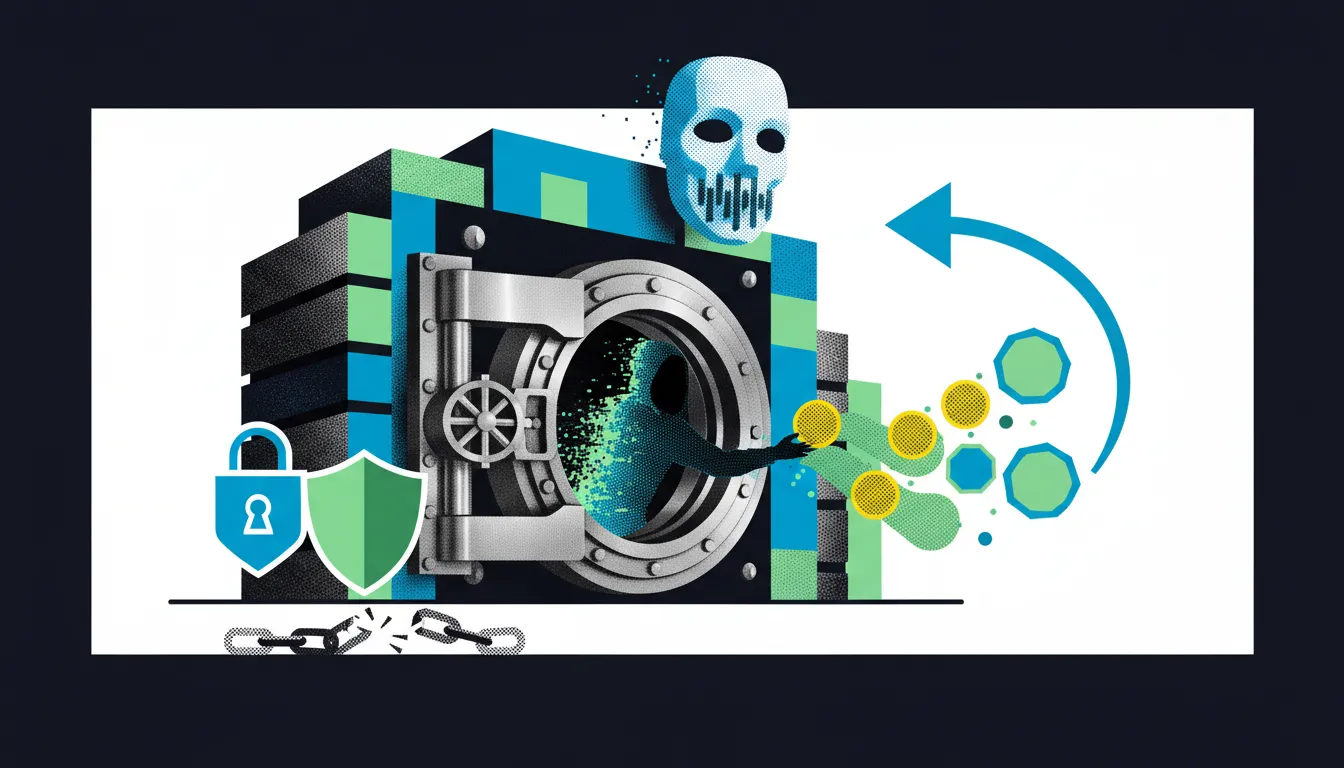
On 16 November 2026, IOSCO, the international body that brings together securities regulators, published in Madrid a statement titled “Statement on Rising Fraud Targeting Retail Investor Accounts at Market Intermediaries” (reference OR/12/2026), together with press release IOSCO/MR/24/2026. It warns retail investors and market intermediaries, brokers and trading platforms first among them, that fraud aimed at retail accounts held with regulated intermediaries is growing in volume and sophistication.
The statement is not primarily about fake brokers. It describes attacks on accounts held with legitimate firms: impersonation, account takeover, and transfers or withdrawals obtained by manipulating the account holder. According to Finance Magnates and Investment Executive, the increase is reported mainly by online intermediaries and by firms focused on retail clients.
AI is amplifying familiar scams
According to IOSCO, fraudsters are increasingly relying on artificial intelligence, social engineering and digital channels, which lets them reach more investors, in more countries, and cause more damage than before. The most common schemes remain impersonation of trusted individuals or organisations, regulators included, account takeover and identity theft.
The most frequently reported uses of AI include AI-generated phishing and manipulation content, bots that coordinate account takeover attempts, synthetic identities, and impersonation through deepfakes and voice cloning. IOSCO nonetheless considers that AI mainly amplifies existing fraud rather than creating new types. Respondents to its survey rank AI-enabled fraud as the leading emerging risk over the next 12 to 24 months. The number of respondents and the size of losses were not disclosed.
Industry participants describe large-scale phishing and account takeover campaigns that hit several firms at once and point to organised activity. Regulators also report market manipulation schemes that generated substantial illicit profits through coordinated promotion and trading.
Victims pushed into approving their own withdrawals
A growing share of losses comes from scams in which the victim, under manipulation, authorises the transaction personally. These operations look legitimate and are therefore hard to detect. Funds leave mainly through bank transfers and crypto-asset withdrawals, channels that are fast, irreversible and difficult to trace, which makes recovery harder.
At intermediaries, the most targeted points are login and authentication, account opening, changes to contact or bank account details, identity verification, transfer and withdrawal instructions, and interfaces with third-party systems. Online channels and call centres are frequently affected.
On the victim side, the most exposed profiles are vulnerable or inexperienced investors, those who place their own orders online, and those active on social media. According to regulators, online activity matters more than age or demographic profile.
Seven lessons for brokers, but no new standard
The statement draws seven lessons for intermediaries. They include phishing-resistant multi-factor authentication applied at login, profile changes and withdrawals; stronger verification of changes to bank details or withdrawal instructions, through client notifications, call-backs or cooling-off periods; and real-time monitoring combined with behavioural analytics. According to IOSCO, controls that rely mainly on client vigilance are less effective against sophisticated manipulation, which is why it recommends a layered, risk-based approach.
The text creates no new IOSCO standard: it shares findings and practices presented as examples. The organisation does call for rapid information sharing and coordinated responses among regulators, intermediaries and other stakeholders, since these frauds often span several products and several countries at once. “Digital innovations are making fraud faster and more international than ever,” said Jean-Paul Servais, Chair of the IOSCO Board, who described information sharing across participants and borders as a crucial tool.
What it means for traders
Trading conditions are unaffected: the statement does not touch leverage, fees or tax, and sets no effective date. Its value for traders lies in the risk map it draws.
The steps identified as most targeted are exactly those where clients act themselves: logging in, changing the bank account used for withdrawals, sending transfer instructions. Clients of brokers, prop firms or crypto exchanges would therefore have reason to check which authentication methods their platform offers, and whether phishing-resistant multi-factor authentication can be enabled both at login and for withdrawals. For those involved in crypto trading, the irreversible nature of withdrawals to a wallet would weigh all the more given that victim-approved transactions remain hard to spot.
The profile of the most exposed investors broadly matches that of retail traders: self-directed online orders and a presence on social media. With voice cloning and deepfakes among the reported techniques, a call, voice message or video claiming to come from a broker, a regulator or a public figure would no longer, on its own, be proof of authenticity.
Finally, brokers and platforms could add controls modelled on the statement's examples, such as a waiting period after a bank detail change or a call-back before a withdrawal. These measures would slow down some withdrawals, and IOSCO presents them as possible practices, not obligations. Traders comparing withdrawal terms when assessing the best prop firms could add the security features on offer to their criteria.
Sources
- IOSCO warns retail investors and market intermediaries about the growth and rising sophistication of fraudulent schemes (IOSCO/MR/24/2026), OICV-IOSCO
- IOSCO's Statement on Rising Fraud Targeting Retail Investor Accounts at Market Intermediaries (OR/12/2026), OICV-IOSCO
- IOSCO Warns Brokers to Brace for AI-Driven Account Takeovers, Finance Magnates
- Retail investors facing tsunami of scams, Investment Executive
- IOSCO Statement on Rising Fraud Targeting Retail Investor Accounts at Market Intermediaries, Regulation Tomorrow (Norton Rose Fulbright)
- IOSCO warns on rising retail investor fraud risks across market intermediaries, Traders Union
This article is published for information purposes. It is neither investment advice nor a recommendation to buy or sell any financial instrument. Verification method and corrections policy: The newsroom.
More news
- Tradoshi connects Charles Schwab, Fidelity, Robinhood, E*TRADE and Webull through SnapTrade17 November 2026
- Tradoshi will track the trading duels of the 2027 Paris Technical Analysis Show live13 November 2026
- UK: Robinhood clients can now request US IPO shares at offer price9 November 2026
- Gnosis Pay discloses data breach on its branded crypto debit cards8 November 2026
Account sync, statistics and discipline tracking. Free plan, no card required.