US Treasury hits Prince Group scam network with third wave of sanctions
On 5 November 2026, the US Treasury sanctioned four individuals and 41 companies supporting the Prince Group, a Cambodian network already designated for online fraud, along with a Malaysian accused of running a scam ring from Madagascar. The action targets the offshore structures used to keep the network running and coincides with a FATF report on scam compounds.
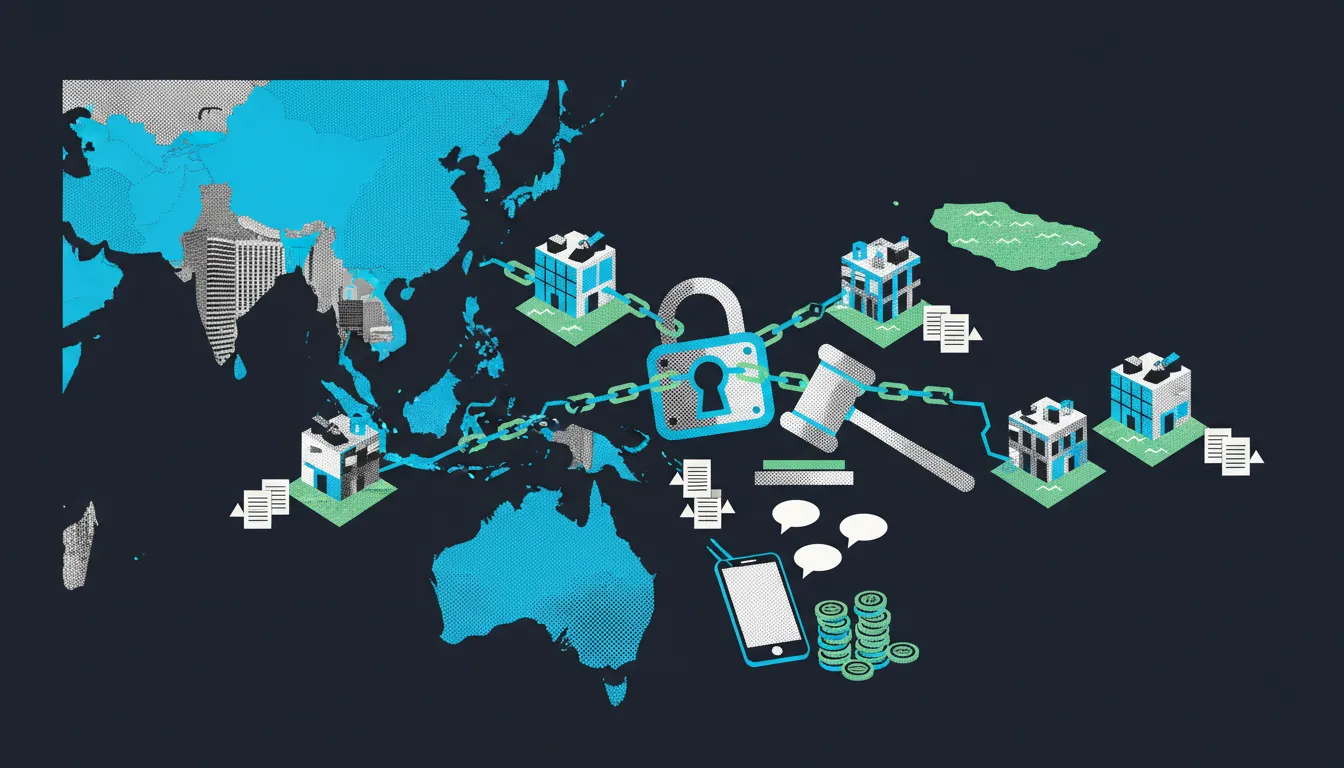
On 5 November 2026, the US Treasury's Office of Foreign Assets Control (OFAC) designated four individuals and 41 entities that support the business network of the Prince Group, a Cambodian organisation the United States had already sanctioned as a transnational criminal organisation for online fraud, money laundering and human trafficking. The same day, Washington also sanctioned Chui Kok Wa, a Malaysian national accused of running a scam ring based in Madagascar that targeted Americans, notably to obtain digital assets from them. According to the Treasury and the State Department, the action covers 46 targets in total: 45 tied to the Prince Group, plus Chui.
This is the third wave of measures against the group, following designations on 14 October 2025 and 23 June 2026 aimed at its leadership, affiliated companies and financial intermediaries. The Treasury places the action under Executive Order 14390, "Combating Cybercrime, Fraud, and Predatory Schemes Against American Citizens".
Billions drawn from investment and romance scams
According to the Treasury, actors linked to the Prince Group have generated billions of dollars from online fraud, including digital asset investment scams, romance scams and other schemes, with victims in the United States and elsewhere. Treasury Secretary Scott Bessent said the department remains committed to dismantling "every layer of these organizations", from leadership to corporate structures and financial intermediaries.
The people named in this round are presented as having helped circumvent earlier sanctions: transferring assets, holding companies on behalf of executives already designated, and using offshore arrangements that conceal beneficial ownership.
Proxies, relatives and offshore holding companies
Among them is Qiu Yong, described as a key member of the Prince Group. He controls companies in the British Virgin Islands and Hong Kong active in money lending and the wine trade, previously worked for a company controlled by the group's chairman Chen Zhi, and holds Cambodian, Saint Lucian and Turkish passports. His assistant, Zhao Mengyao, also known as Amy Zhao, is designated as well. Both are shareholders in Mighty Divine Trust Hong Kong Limited, a company run by Zhou Yun, whom OFAC had already identified as Chen Zhi's wealth manager.
Two Cambodian nationals are sanctioned for holding assets of Chen Bo, a Prince Group executive designated in June 2026, or for co-managing companies with him: his wife He Yujing and Visal Pang. According to the Treasury, Chen Bo transferred property and companies in Japan and Cambodia to the pair, including a Tokyo residence that passed to his wife.
The designated entities are mainly offshore shells registered in the British Virgin Islands, Hong Kong, Cambodia and Singapore, spanning lending, wine, construction, hospitality and mobile applications. None of the companies described in the Treasury's announcement is presented as a trading or investment platform.
FATF sets out principles against scam compounds
The sanctions coincided with the publication in Paris, the same day, of a Financial Action Task Force (FATF) report titled "Combating End-to-End Illicit Financial Flows Linked to Scam Compounds", together with new principles meant to help dismantle these sites. The report refers to workers drawn from at least 80 jurisdictions and to around 120,000 people forced to carry out online scams in Myanmar alone. FATF President Giles Thomson said criminals are using artificial intelligence and other technologies to scale up their schemes, and called for a modernised and faster response. According to the report, social media and messaging services are used at every stage, from recruitment to approaching victims.
What it means for traders
The sanctions do not alter leverage, fees or account access at regulated brokers: they target scam networks and their shell companies, not market intermediaries. Their relevance for retail traders lies in the methods they describe. Digital asset investment scams and romance scams of this kind typically begin with unsolicited contact on social media or a messaging app, followed by pressure to send funds or crypto to a so-called investment platform. The FATF report places these channels at the centre of the process, a point of particular relevance for newcomers to crypto trading.
For US-based traders, the designations would mean that the property of listed persons is blocked and that US persons may not deal with them; checking an unfamiliar counterparty or intermediary in OFAC's SDN list search tool would be a basic precaution. More broadly, confirming that a broker or platform appears on the relevant regulator's register, such as the FCA Register in the UK, NFA BASIC for CFTC-regulated firms, or SEC and FINRA records, before any deposit would reduce exposure to this type of fraud. Victims would have an interest in reporting quickly, to the FBI's IC3 in the US or Action Fraud in the UK, and in alerting their bank or exchange, as the FATF stresses the importance of speed in freezing funds.
Several points remain open. The exact SDN entries, including aliases, addresses and any crypto wallet addresses, have not been specified in the public summaries of the action, and the legal basis used to designate Chui Kok Wa has not been confirmed. The allegations concern people designated by the US executive branch, and the Prince Group has reportedly denied wrongdoing in the past.
Sources
- Treasury Targets Global Scam Networks and the Corporate Infrastructure That Enables Them, U.S. Department of the Treasury
- Dismantling the Prince Group Transnational Criminal Organization, U.S. Department of State
- New landmark report from anti-money laundering watchdog calls for global action to disrupt scam compounds, FATF-GAFI
- US issues more sanctions against Prince Group scam center affiliates, The Record (Recorded Future News)
- Exclusive: U.S. Treasury Sanctions 46 Targets in Global Scam Network Crackdown, Breitbart
- LATEST: 'Landmark' FATF report outlines how social media enables scam compounds, AML Intelligence
- FATF traces over $100 million in victim funds to a single scam compound's crypto wallets, Crypto Briefing
This article is published for information purposes. It is neither investment advice nor a recommendation to buy or sell any financial instrument. Verification method and corrections policy: The newsroom.
More news
- Spotware launches cAntifraud fraud network for brokers and prop firms4 November 2026
- CFTC opens US exchanges to perpetual futures on individual stocks4 November 2026
- CFTC: Texas man and his firm ordered to pay over $13 million for fraud3 November 2026
- AvaTrade unveils its own multi-asset platform with AI-driven signals3 November 2026
Account sync, statistics and discipline tracking. Free plan, no card required.