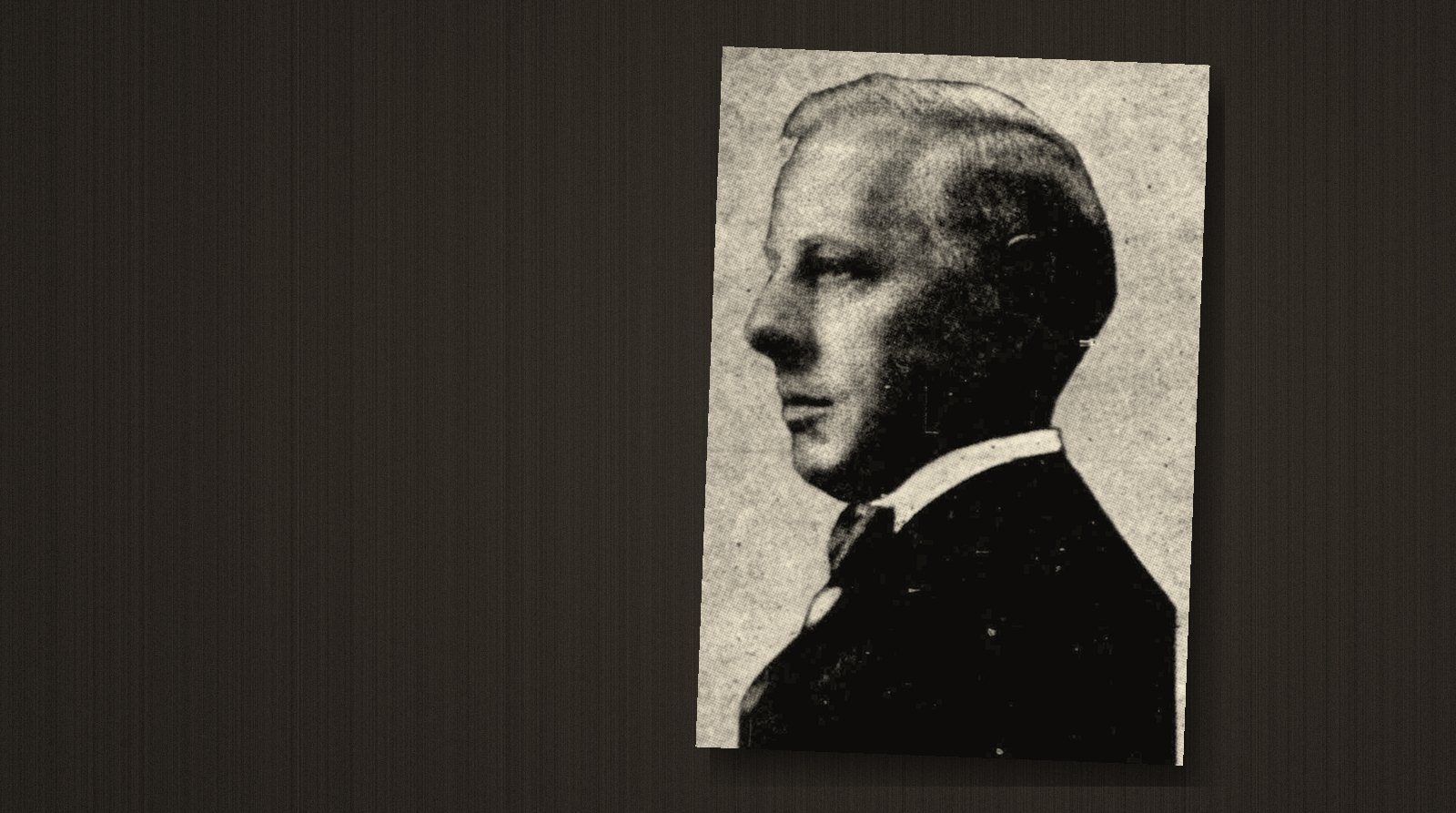
In 1929, Jesse Livermore made roughly 100 million dollars betting on the collapse of Wall Street. Five years later he was bankrupt. No stock trader of his time understood the rules better, and he eventually wrote them down. His life is still the clearest case study of the gap between what a trader knows and what a trader does.
- Jesse Lauriston Livermore (1877-1940) made and lost several fortunes, including about $100 million earned during the 1929 crash.
- He went bankrupt three times. His own accounts show how: a tip followed against his judgment, reckless leverage, a big win that made him careless.
- His trading principles still hold: trade with the trend, cut losses fast, let winners run, never trade someone else's opinion.
- The lesson for you: writing your rules down is not enough. You have to measure, trade after trade, whether you follow them.
Livermore's name comes up in every conversation about trading psychology, usually through Reminiscences of a Stock Operator, the book Edwin Lefèvre drew from his life in 1923. People quote his lines and forget his trajectory. Yet the trajectory teaches the most: a farm boy who read the tape at fifteen, beat Wall Street several times, and finally lost to himself.
This Jesse Livermore biography follows his life through verifiable sources, sets his rules against his actions, and pulls out what a trader can use today. Amounts are in the dollars of the time: the $100 million of 1929 is well over $1.5 billion today.
Who was Jesse Livermore?
Jesse Lauriston Livermore was born on 26 July 1877 in Shrewsbury, Massachusetts, into a farming family. At fourteen his father pulled him out of school to work the fields. He left for Boston with his mother's blessing and found a job as a board boy at PaineWebber: for five dollars a week, he chalked the prices coming off the ticker onto a large quotation board.
That is where it all began. Writing the prices all day, he noticed they did not move at random and that certain sequences often announced what came next. According to Reminiscences, he kept his observations in a small notebook long before he dared to trade. That notebook was, in effect, his first trading journal. The detail matters: the man who lost most often against his own rules started out by observing them with an accountant's rigor.
The Boy Plunger of the bucket shops
At fifteen he made his first profit: $3.12 on five shares of the Chicago, Burlington and Quincy Railroad, traded in a bucket shop. These parlors, everywhere at the time, never bought a single share. Customers bet on the price chalked on the board with a tiny deposit, and the position was closed automatically the moment the deposit was gone. A casino bolted onto the stock market.
Livermore was so good at it that he quit his job at sixteen. He made up to $200 a week, earned the nickname the Boy Plunger, and was eventually banned from the Boston shops. By about twenty he had built up around $10,000, a fortune for a farmer's son.
The first trap was already set, and he did not see it. His method was built for a fake market where orders filled at the posted price, with no delay and no slippage. When he moved to New York in 1900 to trade real stocks through a real broker, it stopped working: his orders filled later, at other prices. A strategy that wins in a protected environment can lose in the real one. That is the whole distance between a backtest and a live forward test.
1901 to 1907: broke, then a millionaire in a day
His New York start was brutal. In 1901 he turned $10,000 into half a million on the Northern Pacific Railway. The same year, a position carried on 400% margin wiped him out, and he had to borrow $2,000 from Edward Francis Hutton, founder of the brokerage E. F. Hutton, to start again.
In 1906, while on vacation, he took a large short position in the Union Pacific Railroad the day before the San Francisco earthquake and pocketed $250,000. He later said he sold on a hunch he could not explain. That kind of trade damages a trader: a spectacular win with no clear reason mostly teaches you to trust your gut, and to listen to your method a little less.
Then came the Panic of October 1907. Banks wobbled, the market collapsed, and Livermore, short, made $1 million in a single day. As the story goes, J. P. Morgan sent word asking him to stop selling so as not to deepen the crisis. He complied, flipped long and rode the rebound. At thirty he was worth $3 million. He bought a $200,000 yacht, a private rail car and an apartment on the Upper West Side.
1908: a fortune lost on a tip
The next year he made the mistake he would spend the rest of his life warning against. Theodore Price, a prominent cotton trader, talked him into buying cotton. Livermore acted against his own read of the market, and while he bought, Price was quietly selling. Most of his 1907 gains went with it.
Reminiscences tells the story under invented names. It also describes, from the same period, a reflex that is even more ordinary and more telling: holding both wheat, which was rising, and cotton, which was falling, he sold the winning wheat and kept the losing cotton, then added to it. Cut the winner, feed the loser: the exact opposite of what he would teach. Adding to a position that goes against you turns a mistake into a disaster, the same mechanism as revenge trading, long before it had a name.
He drew a rule from it that he repeated to the end: never trade on someone else's advice. A tip, even from an expert, is a trade you have not analyzed, so a trade you do not know how to exit.
1915: bankruptcy, then the comeback
The cotton losses and the lean years that followed led to bankruptcy in 1915. He did not disappear. From 1917 a run of successful trades put him back on his feet, and Reminiscences shows him paying back his old creditors even though the bankruptcy had released him. In 1918 he married Dorothy Wendt, a former Ziegfeld Follies dancer, with whom he had two sons, Jesse Jr. and Paul.
That ability to bounce back is part of his legend, and it was real. It also had a downside: with each comeback he went straight back to the same lifestyle and the same appetite for the huge trade. He did not come back more careful. He came back more certain of himself.
1929: about $100 million on the crash
The peak of his career is also its most misunderstood episode. Early in 1929, convinced the market had risen too far, he started selling short, spreading his orders across more than a hundred brokers to hide what he was doing. The market kept climbing anyway, and by spring he was down more than $6 million on paper.
In October, Wall Street crashed. Livermore netted about $100 million, one of the largest fortunes in the country. The public blamed him for the crash, he received death threats and hired an armed bodyguard. Being right too early is expensive: his conviction was correct, but it had to survive a drawdown most accounts could never have carried.
1934: the third bankruptcy
How did Jesse Livermore lose his fortune? Nobody knows exactly. The years after the crash combined losing trades in a market that had turned erratic, a lavish lifestyle and a private life coming apart. His 1932 divorce cost him a $10 million settlement. The Great Neck house that had cost him $3.5 million was sold for $222,000.
On 7 March 1934 he was suspended from the Chicago Board of Trade. His bankruptcy filing, the third, listed $84,000 in assets against $2.5 million in debts. The following year a family tragedy made the papers: his elder son, sixteen, was shot and wounded by his mother during a quarrel. Livermore went through long periods of depression.
What he knew: Jesse Livermore's trading rules
In March 1940 Livermore published How to Trade in Stocks, the only book written in his own hand. It lays out a method that Reminiscences only hinted at. These are the principles that recur in his book and in Reminiscences, the ones traders still quote a century later, and the core of what people call the Jesse Livermore trading strategy.
- Follow the line of least resistance. Price goes where it meets the least opposition. You do not guess the direction, you wait for the market to show it, then you follow.
- Wait for pivotal points. He entered only when price broke through a key level that confirmed the move, and preferred missing the start to being on the wrong side.
- Cut losses quickly. A position that goes against you from the entry is a signal, not an opinion to defend. Never average down.
- Let profits run. "It never was my thinking that made the big money for me. It always was my sitting." In other words, holding a winning position without touching it.
- Add only to what is working. He built positions in stages, and each addition had to be confirmed by a profit on the previous one.
- Never trade on tips. The rule he paid for most dearly, in 1908.
- Take money off the table. After a big win he advised setting part of it aside, the part the market can never take back.
The speculator's chief enemies are always boring from within. It is inseparable from human nature to hope and to fear. In speculation when the market goes against you, you hope that every day will be the last day, and you lose more than you should [...]. And when the market goes your way you become fearful that the next day will take away your profit, and you get out, too soon. (Reminiscences of a Stock Operator)
That passage sums up what we now call fear and greed: hope makes you hold losers, fear makes you cut winners. Livermore described it with clinical precision. Knowing it did not protect him.
What he did: the great gap
Put end to end, the episodes of his life draw a pattern with no mystery in it. Livermore did not lose because he did not know what to do. He lost in the moments when his emotions overrode his rules, and those moments almost always came right after a big win, or in the middle of distress.
| What he wrote | What he did | When |
|---|---|---|
| Never follow a tip | Bought cotton on Theodore Price's advice, against his own read of the market | 1908 |
| Cut losses fast, never average down | Kept the losing cotton, added to it, and sold the winning wheat | Around 1908 |
| Never risk what you cannot afford to lose | Traded on 400% margin and was wiped out | 1901 |
| Take part of your profits off the table | Yacht, private rail car, a $3.5 million house: the fortune stayed exposed | 1907 to 1932 |
The most dangerous moment was the day after each victory. After 1907 he believed he could read any market, including cotton, which he knew poorly. After 1929 he lived as if $100 million could not evaporate. The big win is when traders feel strongest, and also when they are closest to breaking their own rules, by sizing up or pushing leverage.
Then there is what neither rules nor discipline cover. Livermore went through long periods of depression, at a time when nobody talked about it. His mood followed his account, and his account followed his mood. No method protects someone who is no longer in a state to apply it.
Five lessons for today's trader
1. Writing your rules down is not enough
Livermore had his rules in his head, and even on paper. What he lacked was a way to see, day after day, how far he drifted from them. That is what a trading journal is for: not just logging trades, but measuring how well you follow your trading rules. In Tradoshi, that is the job of the discipline score, which checks every day whether you followed your own rules and shows how much more your disciplined days earn. A gap you can see in numbers is a gap you can fix.
2. Distrust yourself right after a big win
Almost all of his ruins started in euphoria. After a very good run, cut your size instead of raising it, and reread your rules before the next trade. Overtrading after a win costs as much as overtrading after a loss, it just feels better.
3. A tip is a trade you have not analyzed
A signal bought on a channel, a friend's opinion, an influencer's conviction: all of it is the cotton of 1908. If you do not know why you entered, you will not know when to get out. The only way to follow an outside idea is to run it through your own method, then own it as your trade, with your stop.
4. Keep your life separate from your account
Livermore advised taking part of your profits off the table. His life shows what happens when you stay exposed: each fortune could flow back into the market. Withdrawing part of your gains regularly, keeping savings that never serve as margin, and knowing your risk of ruin are boring rules. They are what keeps you off his path.
5. Your mental health is part of your risk management
Stress, fatigue, grief or discouragement degrade decisions long before you notice. Traders who last stop when they are not fit to trade, like a pilot who does not fly sick. Logging your emotional state next to your trades shows you, in numbers, what your mood costs your account.
Jesse Livermore books: Reminiscences and How to Trade in Stocks
Reminiscences of a Stock Operator, published in 1923 by the journalist Edwin Lefèvre, tells Livermore's life under the name Larry Livingston. It is a fictionalized biography based on interviews with him, and a century later it is still one of the most widely read books among traders.
How to Trade in Stocks is the only book Livermore wrote himself, published in March 1940, a few months before his death. It sold poorly, with the war on everyone's mind. Later editions add commentary by Richard Smitten. If you read just one, start with Reminiscences: it is a story, and its psychology lessons go down easily. More classics are in our selection of the best trading psychology books.
His death in 1940
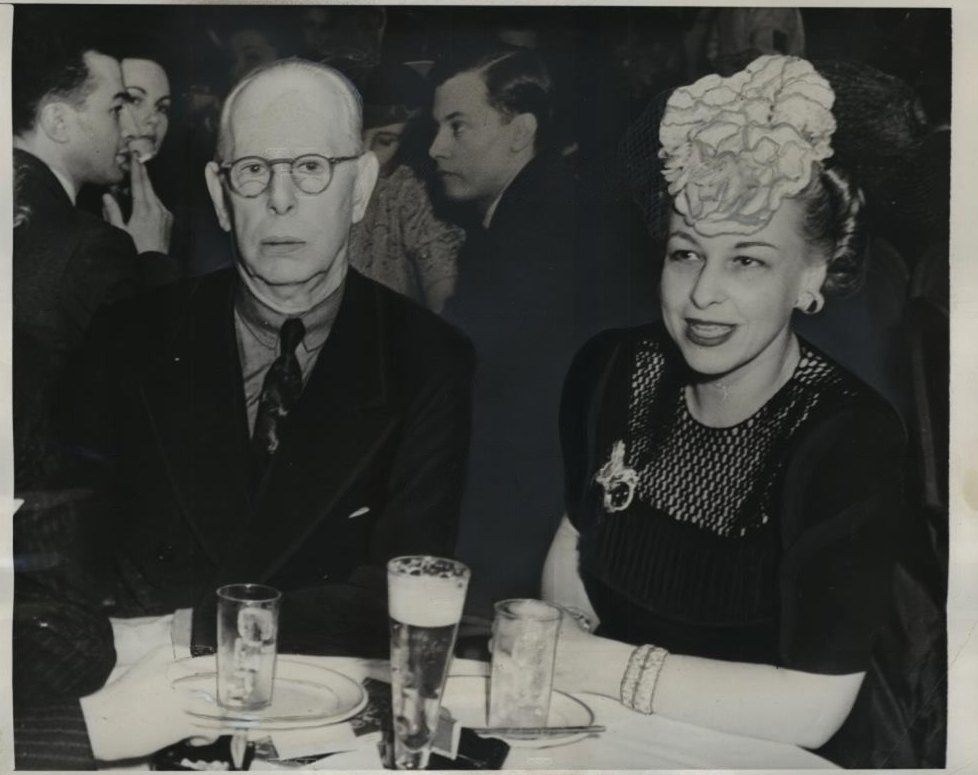
On 28 November 1940, Thanksgiving Day, Jesse Livermore took his own life in a Manhattan hotel, at 63. He left his wife an eight-page note in which he wrote that he was tired of fighting and that he was a failure. The man Wall Street had considered the greatest speculator of his time judged himself that way.
His story is not summed up by its ending, and it should not be read as trading's fate. It is simply a reminder that the pressure of an account does not stop at the close. If you are going through a dark period, related to your trading or not, talk to someone. In the United States you can call or text 988, the Suicide and Crisis Lifeline. Elsewhere, findahelpline.com lists free, confidential lines by country.
Frequently asked questions
Who was Jesse Livermore?
Jesse Lauriston Livermore (1877-1940) was an American stock trader and speculator, regarded as one of the greatest traders in history. He started at 14 as a quotation-board boy in Boston, made $1 million in a single day during the Panic of 1907 and about $100 million during the 1929 crash.
What was Jesse Livermore's net worth?
At his peak, after the 1929 crash, about $100 million, well over $1.5 billion in today's dollars. By his 1934 bankruptcy he listed $84,000 in assets against $2.5 million in debts.
How did Jesse Livermore lose his fortune?
The details are not known. Between 1930 and 1934, losing trades in a difficult market, a very expensive lifestyle and a costly divorce led to his third bankruptcy in 1934.
What was Jesse Livermore's trading strategy?
He traded with the trend. He waited for price to break a pivotal point to enter in the direction of the line of least resistance, cut losses quickly, added only to winning positions and let them run. He refused outside tips.
Which Jesse Livermore book should I read?
Reminiscences of a Stock Operator, the fictionalized biography Edwin Lefèvre wrote in 1923, for the story and the psychology. How to Trade in Stocks (1940), the only book he wrote himself, for his method.
What is Jesse Livermore's most famous quote?
"There is nothing new in Wall Street. There can't be because speculation is as old as the hills. Whatever happens in the stock market today has happened before and will happen again."
How did Jesse Livermore die?
He took his own life on 28 November 1940 in New York, at 63, after years of depression and a third bankruptcy.
Sources
- Wikipedia, Jesse Lauriston Livermore: dates, amounts, bankruptcies and family life, read on 2 October 2026.
- Edwin Lefèvre, Reminiscences of a Stock Operator, George H. Doran, 1923.
- Jesse L. Livermore, How to Trade in Stocks, Duell, Sloan and Pearce, 1940.
- Photos: Financial World, 3 November 1923, and Acme Photo, November 1940, public domain, via Wikimedia Commons.
.jpg)