 By Benjamin Roure L'Hermitte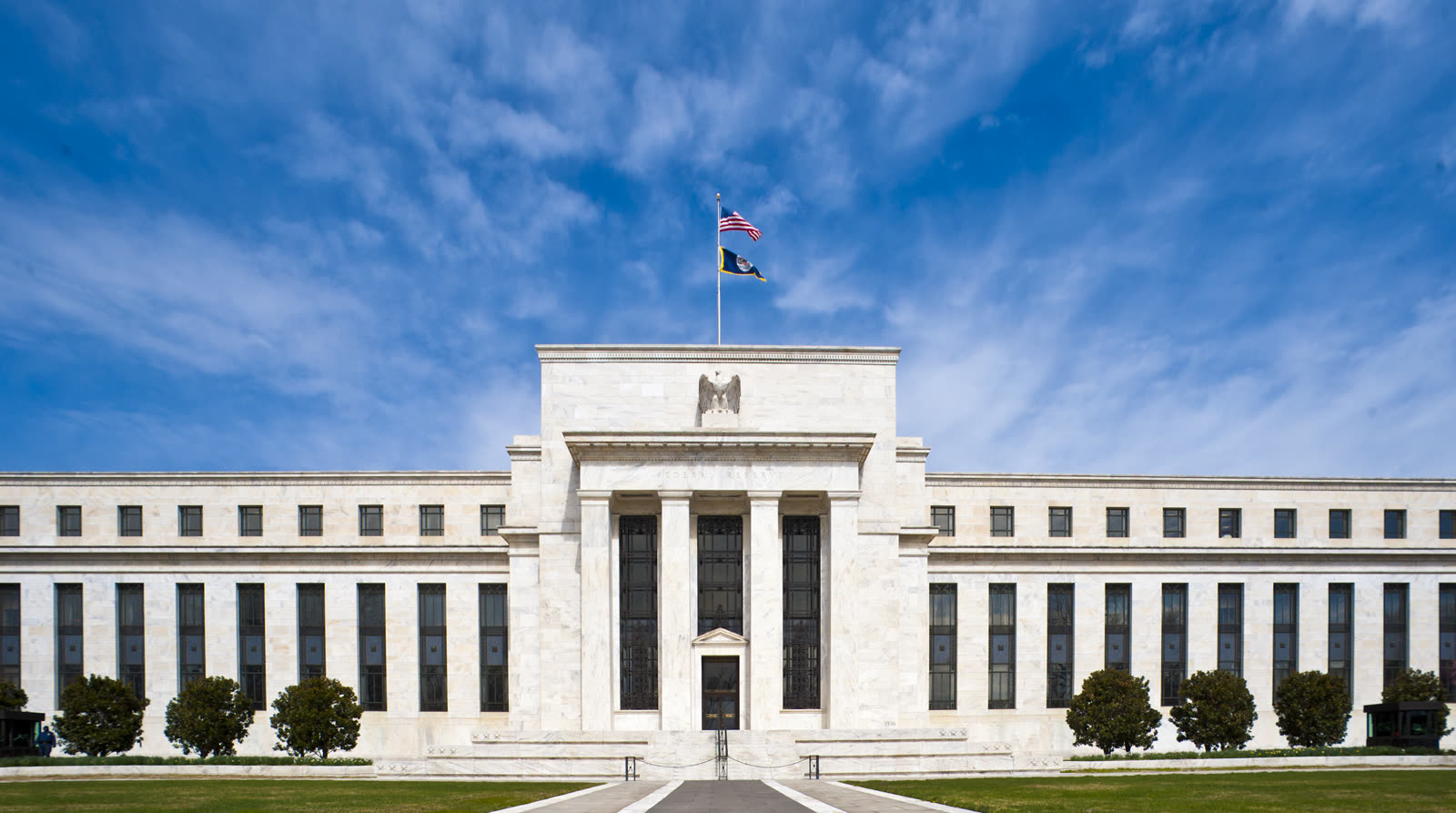
An economic calendar is the dated list of upcoming statistical releases and central bank decisions, with the time of each one: it tells a trader when volatility is scheduled, not what the number will be. This guide gathers the Fed meeting dates and the other official dates of the big announcements left in 2026 and already published for 2027, each read on the calendar of the institution that publishes it, explains what each announcement measures, and says how to use it without betting on the number, whether you trade forex, indices or gold.
- FOMC: two meetings left in 2026, on 27-28 October and 8-9 December, then eight in 2027; statement at 2:00 p.m. New York time.
- NFP and CPI: released by the Bureau of Labor Statistics at 8:30 a.m. Eastern time; the 2027 schedule was not online on the date of consultation.
- ECB, Bank of England, Bank of Japan, SNB: their 2027 calendars are published, the dates are in the tables.
- Method: an announcement is something you locate and log in your journal, not something you trade on the number; around the hour, the spread widens and a stop no longer guarantees its price.
The tables were read on 7 October 2026. Every institution can change its calendar: the official page, linked in each section, is the reference. To tie these dates to what you trade, the market pages give session hours and a year of prices per instrument, and risk management says how much to risk per trade, announcement or not.
What an economic calendar is, and what it is not
An economic announcement is a scheduled release: an official statistic, such as employment or inflation, or a central bank decision, such as a change in the policy rate. Its date and time are known months in advance, because the institutions that publish keep a calendar and stick to it. The economic calendar gathers these appointments into a single list, country by country, with the time of each release.
What the calendar does not contain is the number itself, nor the market's reaction. It serves one purpose, and that is enough: knowing at which point of the day, the week and the month the market you trade has an appointment. A technical trader uses it so as not to be caught out; a news trader uses it to be on time. In both cases, what the announcement did to your trades is read afterwards in your journal, not in the calendar.
The calendars of specialised sites and of your broker carry these same dates, sometimes with a lag when an institution moves a release. The primary source remains the institution's page: that is what is linked in each section of this guide, and that is what to reopen before a busy week.
Fed meeting dates: the FOMC in 2026 and 2027
According to the Federal Reserve's page on the FOMC, the Federal Open Market Committee consists of twelve members: the seven governors, the president of the New York Fed and four regional Reserve Bank presidents on a one-year rotation. It holds eight regularly scheduled meetings per year, at which it reviews economic and financial conditions, determines the appropriate stance of monetary policy and assesses the risks to price stability and sustainable growth. That is where the Fed's policy rate is decided.
The statement is released at 2:00 p.m. New York time: the one of 16 September 2026 carries the line 'For release at 2:00 p.m. EDT', and the Chair's press conference follows the same afternoon. On the FOMC meeting calendar, every 2026 meeting held so far has been followed by a press conference, and the meetings marked with an asterisk come with a Summary of Economic Projections. The calendar states that each meeting date is tentative until confirmed at the meeting immediately preceding it, and that a two-day meeting is already scheduled for 25-26 January 2028.
| FOMC meeting | Statement (New York time) | Economic projections |
|---|---|---|
| 27-28 October 2026 | Wednesday 28 October, 2:00 p.m. | No |
| 8-9 December 2026 | Wednesday 9 December, 2:00 p.m. | Yes |
| 26-27 January 2027 | Wednesday 27 January, 2:00 p.m. | No |
| 16-17 March 2027 | Wednesday 17 March, 2:00 p.m. | Yes |
| 27-28 April 2027 | Wednesday 28 April, 2:00 p.m. | No |
| 8-9 June 2027 | Wednesday 9 June, 2:00 p.m. | Yes |
| 27-28 July 2027 | Wednesday 28 July, 2:00 p.m. | No |
| 14-15 September 2027 | Wednesday 15 September, 2:00 p.m. | Yes |
| 26-27 October 2027 | Wednesday 27 October, 2:00 p.m. | No |
| 7-8 December 2027 | Wednesday 8 December, 2:00 p.m. | Yes |
In London, 2:00 p.m. in New York is 7:00 p.m., except on 28 October 2026 and 17 March 2027, when it is 6:00 p.m.: in those weeks, daylight saving time applies on only one side of the Atlantic. Fed meeting dates read on 7 October 2026 on the Federal Reserve's website; the official page is the reference.
NFP: the US jobs report
The Bureau of Labor Statistics' 'Employment Situation' report is what traders call the NFP, for non-farm payrolls. According to its technical note, it presents statistics from two surveys: the household survey, a sample of about 60,000 households, which provides the labor force, employment and unemployment figures; and the establishment survey, which each month surveys about 119,000 businesses and government agencies, representing approximately 622,000 worksites, to measure employment, hours and earnings of employees on nonfarm payrolls. The payrolls number comes from the second; the unemployment rate from the first.
The release schedule is on the BLS page for the Employment Situation: every release there is scheduled at 8:30 a.m. Eastern time. On the date of consultation, the page gave the dates up to the November 2026 report, released on 4 December, and no 2027 date: the 2027 schedule was not online yet.
| Reference month | Release | Time (New York) |
|---|---|---|
| October 2026 | Friday 6 November 2026 | 8:30 a.m. |
| November 2026 | Friday 4 December 2026 | 8:30 a.m. |
In London, 8:30 a.m. in New York is 1:30 p.m. on both dates.
CPI: US inflation
According to the BLS page on the Consumer Price Index, the CPI is a measure of the average change over time in the prices paid by urban consumers for a market basket of consumer goods and services. Since price stability is one of the goals the FOMC assesses at each meeting, according to the Fed page cited above, it is the US inflation indicator traders follow alongside the FOMC.
It is released monthly at 8:30 a.m. Eastern time, according to the CPI release schedule, which, on the date of consultation, stopped at the November 2026 CPI, released on 10 December, with no 2027 date.
| Reference month | Release | Time (New York) |
|---|---|---|
| September 2026 | Wednesday 14 October 2026 | 8:30 a.m. |
| October 2026 | Tuesday 10 November 2026 | 8:30 a.m. |
| November 2026 | Thursday 10 December 2026 | 8:30 a.m. |
In London, that is 1:30 p.m. on all three dates.
ECB: the Governing Council's monetary policy meetings
The ECB's page on the Governing Council states that it usually meets twice a month, that it takes its monetary policy decisions every six weeks, and that these decisions are explained at a press conference held at the same rhythm. The ECB's key interest rates are decided there. Since 21 July 2022, according to the ECB's press release on its new times, decisions are published at 14:15 CET, the press conference begins at 14:45 CET and the monetary policy statement is published at 15:00 CET.
The dates come from the calendar of Governing Council meetings, read on 7 October 2026: it already publishes the whole of 2027 and the start of 2028. Only the monetary policy meetings are listed here; the so-called non-monetary policy meetings do not produce a rate decision.
| Monetary policy meeting | Decision at 14:15, press conference at 14:45 (Frankfurt) |
|---|---|
| 28-29 October 2026 | Thursday 29 October 2026 |
| 16-17 December 2026 | Thursday 17 December 2026 |
| 3-4 February 2027 | Thursday 4 February 2027 |
| 17-18 March 2027 | Thursday 18 March 2027 |
| 28-29 April 2027 | Thursday 29 April 2027 |
| 9-10 June 2027 | Thursday 10 June 2027 |
| 21-22 July 2027 | Thursday 22 July 2027 |
| 8-9 September 2027 | Thursday 9 September 2027 |
| 27-28 October 2027 | Thursday 28 October 2027 |
| 15-16 December 2027 | Thursday 16 December 2027 |
In London, 14:15 in Frankfurt is 1:15 p.m. all year. In New York it is 8:15 a.m., except on 29 October 2026 and 18 March 2027, when it is 9:15 a.m.
Bank of England, Bank of Japan, Swiss National Bank
Bank of England: the MPC announcements
According to the Bank of England's monetary policy page, the Monetary Policy Committee, nine members, sets and announces policy eight times a year, roughly once every six weeks, and the decision is published with the minutes of the meeting at 12 noon London time, usually on a Thursday. The dates below come from the page of MPC dates for 2026 and 2027, where they are given as confirmed; four announcements a year come with the quarterly Monetary Policy Report.
| MPC announcement (12 noon, London) | Monetary Policy Report |
|---|---|
| Thursday 5 November 2026 | Yes |
| Thursday 17 December 2026 | No |
| Thursday 4 February 2027 | Yes |
| Thursday 18 March 2027 | No |
| Thursday 29 April 2027 | Yes |
| Thursday 17 June 2027 | No |
| Thursday 29 July 2027 | Yes |
| Thursday 16 September 2027 | No |
| Thursday 4 November 2027 | Yes |
| Thursday 16 December 2027 | No |
In New York, 12 noon in London is 7:00 a.m., except on 18 March 2027 and 4 November 2027, when it is 8:00 a.m.
Bank of Japan: the monetary policy meetings
The Bank of Japan's page on its monetary policy meetings publishes the 2026 and 2027 calendars. Each meeting runs over two days and the statement is released at its conclusion, with no fixed time stated on the page; the page does give one for the Outlook Report, whose full text is released at 2:00 p.m. on the next business day, and for the Summary of Opinions and the minutes, released at 8:50 a.m. Tokyo time.
| Bank of Japan meeting | Outlook Report |
|---|---|
| 29-30 October 2026 | Yes |
| 17-18 December 2026 | No |
| 21-22 January 2027 | Yes |
| 17-18 March 2027 | No |
| 27-28 April 2027 | Yes |
| 10-11 June 2027 | No |
| 21-22 July 2027 | Yes |
| 21-22 September 2027 | No |
| 28-29 October 2027 | Yes |
| 16-17 December 2027 | No |
Swiss National Bank: the quarterly assessment
The SNB publishes its monetary policy assessment four times a year, in March, June, September and December. Its publication schedule, read on 7 October 2026, gives for each one a press release at 9:30 a.m. and a news conference at 10:00 a.m. Swiss time.
| SNB monetary policy assessment | Press release (Swiss time) |
|---|---|
| Thursday 10 December 2026 | 9:30 a.m. |
| Thursday 18 March 2027 | 9:30 a.m. |
| Thursday 24 June 2027 | 9:30 a.m. |
| Thursday 23 September 2027 | 9:30 a.m. |
| Thursday 16 December 2027 | 9:30 a.m. |
In London, 9:30 a.m. Swiss time is 8:30 a.m. all year; in New York it is 3:30 a.m., or 4:30 a.m. on 18 March 2027.
Euro area: the flash estimate of inflation
Eurostat publishes a flash estimate of euro area inflation every month. The one of 2 October 2026, for September, announces the next release in its header: 4 November 2026. Beyond that, Eurostat's release calendar is an interactive page we could not read as text on the date of consultation. The ECB's release calendar for the seasonally adjusted HICP publishes its own seasonally adjusted version of the flash estimate at 15:00 CET on the following dates: 4 November 2026 for October, 1 December 2026 for November and 6 January 2027 for December.
Brazil: Copom and IPCA
The Monetary Policy Committee of the Central Bank of Brazil, the Copom, sets the Selic rate: the minutes of its 279th meeting, in June 2026, discuss the Selic paths judged most appropriate. Its meeting calendar is on the Copom calendar page, a page that only renders with JavaScript and that we could not read as text on 7 October 2026: no Copom date is listed here, the official page is the reference.
The IPCA, the IBGE's consumer price index, is the index the Copom compares with the inflation target in those same minutes. The IBGE indicators calendar gives its dates; the IBGE's open data service, read on 7 October 2026, listed: Friday 9 October 2026 for the September IPCA, Thursday 12 November for October, Friday 11 December for November and Tuesday 12 January 2027 for December. The release time did not appear there in a form we could confirm.
What announcements change on your screen: spread, slippage, stop
An announcement is not traded on the number, it is prepared for. Three things happen around the hour. The spread widens: the broker IG's glossary defines the spread as the difference between the buy and sell prices quoted for an asset, and notes that during periods of high volatility, when prices change rapidly, it is usually much wider. Slippage appears: IG's page on slippage defines it as the gap between the requested price and the executed price, caused by high volatility or by a gap in the market, a sharp move with little or no trading in between. And the stop no longer protects at the planned price: FINRA, the US broker regulator, writes that if markets are volatile and prices are changing rapidly, a stop order may be executed at a price that is significantly different from the stop price. To place a stop with volatility in mind, see where to place your stop loss and the lesson on the ATR.
In practice: know at what time the announcement that concerns your instrument lands, and decide before, not during. For a technical trader, the simplest rule is not to open a position in the minutes before it and to let the spread return to its usual width afterwards. This is not a rule about reacting to the number: nobody knows in advance how the market will react to a release. Your risk per trade framework simply has to include that hour.
Log the announcement in your journal. A trade taken within the hour of an FOMC or an NFP does not have the same profile as an ordinary session trade: with an 'announcement' tag, your journal will tell you after a few months whether your strategy holds in that context or is better kept away from it, and the P&L calendar brings out announcement days if you regularly lose on them. In Tradoshi, the daily plan shows the day's economic calendar filtered on the currencies you trade, as described on the AI analysis and daily plan page.
Frequently asked questions
When is the next FOMC meeting?
On 27-28 October 2026, with the statement on the 28th at 2:00 p.m. New York time, 6:00 p.m. in London that day. Then on 8-9 December 2026, with economic projections. The eight Fed meeting dates of 2027 are in the table of the FOMC section, read on 7 October 2026 on the Federal Reserve's calendar.
What time is the NFP released?
At 8:30 a.m. Eastern time, 1:30 p.m. in London. The two remaining 2026 dates are Friday 6 November and Friday 4 December. The 2027 schedule had not been published by the BLS on the date of consultation.
What is the FOMC?
The Federal Open Market Committee is the Federal Reserve committee that determines the stance of US monetary policy, including the policy rate. Twelve members and eight regularly scheduled meetings a year, according to the Fed page that describes it. Its statement is released at 2:00 p.m. New York time, and the press conference follows.
What is an economic announcement in trading?
A dated, scheduled release, a statistic or a central bank decision, whose time is known in advance: jobs report, inflation, rate decision. The economic calendar is the list of them. You locate it to know when volatility is scheduled, not to bet on the number.
When does the ECB meet in 2027?
Monetary policy decisions fall on Thursdays 4 February, 18 March, 29 April, 10 June, 22 July, 9 September, 28 October and 16 December 2027, at 14:15 Frankfurt time, according to the Governing Council calendar read on 7 October 2026. The last two of 2026: 29 October and 17 December.
Should I stop trading during announcements?
For a classic technical strategy, not opening a position in the minutes around the announcement is the simplest rule; a strategy built for announcements is judged by its own standards. In both cases, your journal decides: tag the trades taken around an announcement and compare them with the others. What holds for everyone: a wider spread and possible slippage around the hour, so a stop that does not guarantee its price.