 By Benjamin Roure L'Hermitte

Day trading is the practice of opening and closing market positions within the same trading day, usually to capture short-term price movement rather than hold investments for months or years. A stronger approach combines a clear strategy, a disciplined setup, reliable tools, strict risk controls, and a realistic understanding of rules and costs. This guide explains how to prepare before your first intraday trade, what to look for in platforms and apps, and how to avoid the common mistakes that turn active trading into uncontrolled risk.
What makes day trading different from regular investing?
Day trading is different because the trader is trying to make decisions inside a compressed time window, often based on intraday price action, volume, volatility, news, and order flow. Unlike long-term investing, day trading usually depends on execution speed, preplanned exits, and the ability to stay calm when a position moves quickly against you. FINRA describes frequent intraday trading as actively trading securities throughout the day in an attempt to profit from small price movements, and warns that it comes with risks, particularly on margin, including losing some or all of your investment.
That difference changes everything. A long-term investor can often wait through noise, review quarterly results, and add to positions gradually. A day trader has to know the trade idea before entering, define where the idea is wrong, and exit without debate when the setup fails. The time pressure is why day trading needs rules before it needs excitement.
Watching charts is not a process. A repeatable process means choosing the right market, waiting for defined setups, controlling position size, recording results, and refining decisions over time. A beginner who skips that process may feel active, but activity is not the same as edge.
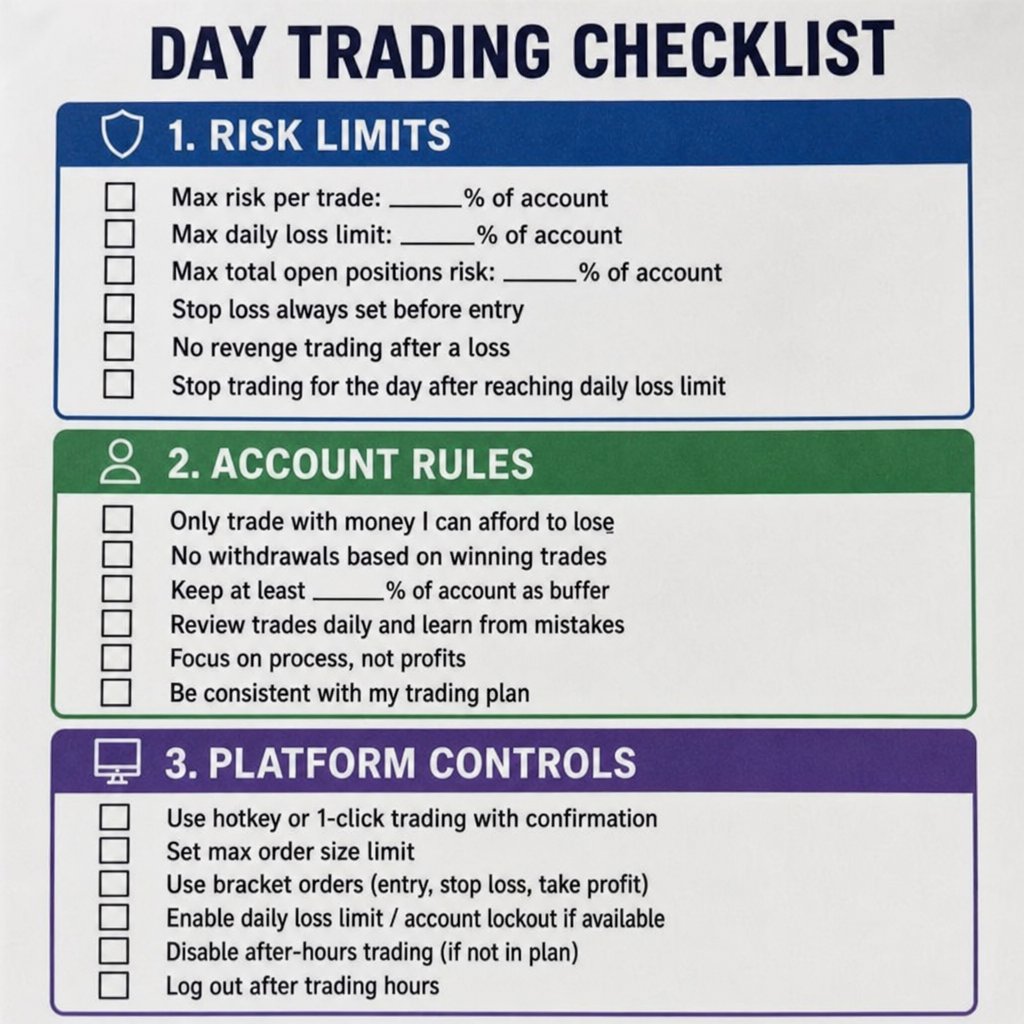
The foundation is risk control, not prediction
A common misconception among beginners is that success in day trading stocks depends on predicting every move. In reality, the goal is to create trades where the potential reward justifies the risk, then keep losses small enough that one bad morning does not damage the account. Markets can move unpredictably, and FINRA calls trading throughout the day time-intensive and says strategies that involve frequent trading on margin are generally not appropriate for investors with limited financial resources, limited experience, or low risk tolerance. What the law itself allows and regulates, broker, products, taxes and market abuse, is covered in is day trading legal.
A practical risk plan answers five questions before any order is placed:
- How much can I lose on this trade? Decide the dollar risk before entry, not after the position turns red.
- Where is my stop? The stop should be tied to the setup, such as a broken support level or failed breakout, not to hope.
- What is the target? A trade with a tiny upside and a large downside is usually not worth taking.
- How many trades can I take today? A daily limit helps prevent revenge trading after losses.
- When do I stop trading? A maximum daily loss, maximum number of losing trades, or time-based cutoff can protect judgment.
A fixed risk-per-trade model is a simple place to start, such as risking only a small percentage of account capital on any single idea. The exact number depends on account size, strategy, and experience, but the principle is universal: the account must survive normal losing streaks. If a single day trade can erase weeks of progress, the position is too large.
Risk control also includes avoiding low-quality trades. A setup that appears in a thinly traded stock with wide spreads may look attractive on a chart but become difficult to enter or exit cleanly. A trade taken because of boredom is not a strategy. A trade taken because a social media post says “this is going higher” is not analysis.
Core strategies day traders use
No strategy works all the time. Market conditions shift, volatility expands and contracts, news changes sentiment, and liquidity varies from one stock to another. Still, most day trading strategies fall into a few broad categories. The key is not to try all of them at once, but to study one approach deeply enough to understand when it works and when it should be avoided.
Momentum trading
Momentum trading focuses on stocks or other instruments already moving with strong volume and direction. A trader may look for a stock breaking above a key level, reacting to news, or accelerating after the market open. The idea is to participate while buyers or sellers are still in control, then exit before momentum fades.
A momentum trader needs clear confirmation. That might include increasing volume, a break of a prior high, a pullback that holds support, or a strong move after a news catalyst. The danger is chasing. Buying after a stock has already stretched far from a reasonable entry can leave the trader exposed to a sharp reversal.
Scalping
Scalping seeks small, frequent gains from short moves. A scalper may hold positions for seconds or minutes, relying on tight spreads, fast execution, and disciplined exits. This style can be attractive because it reduces overnight risk and avoids long periods in a position, but it is also demanding.
Scalping requires excellent order execution and realistic cost awareness. Even when commissions are low, spreads, slippage, options contract fees, and data fees can affect results. A scalper who does not track costs may think a scalping strategy is working when the net result is weaker than expected.
Breakout and breakdown trading
Breakout trading looks for price moving beyond a defined resistance level; breakdown trading looks for price falling through support. These setups are popular because they offer obvious entry and stop areas. For example, a trader may enter when a stock clears the morning high and place a stop below the breakout level if the move fails.
The challenge is false breakouts. Price may push above a level, attract late buyers, then reverse sharply. To reduce that risk, some traders wait for a retest, require above-average volume, or avoid breakouts that occur after an extended move.
Range trading
Range trading works best when price is moving between support and resistance rather than trending strongly. A trader may buy near the lower edge of a range and sell near the upper edge, or short near resistance and cover near support if short selling is available and appropriate. This style rewards patience because the trader waits for price to reach an area instead of trading in the middle.
The risk is that ranges eventually break. A range trader needs an exit plan for the moment price stops respecting the boundary. Without a stop, a small range trade can turn into a large trend loss.
News-based trading
News-based trading focuses on earnings, economic data, product announcements, analyst actions, legal developments, or sector headlines. News can create volatility, and volatility can create opportunity. It can also create violent whipsaws, trading halts, and fast price gaps.
A news trader needs a reliable news feed, fast decision-making, and a clear rule for avoiding trades when the spread is too wide or the move is already overextended. The goal is not to trade every headline. It is to identify situations where the market’s reaction creates a defined opportunity with controlled risk.
How do you build a day trading setup that supports better decisions?
A good setup reduces friction, helps you see only the information that matters, and makes it harder to place impulsive trades. The best one is not necessarily the most expensive desk with the most screens; it is the setup that lets you prepare, execute, monitor risk, and review performance consistently. FINRA notes that frequent trading requires close attention to market dynamics, broker systems, margin rules, costs, and tax implications, so your setup should make those areas visible rather than hidden.
Start with the basics: stable internet, a reliable device, a broker platform you understand, real-time quotes if needed for your strategy, and a simple way to record trades. A beginner does not need six monitors, but they do need enough screen space to view a chart, order ticket, watchlist, and account risk without constantly switching windows.
A practical setup may include:
- Primary trading platform for order entry, account monitoring, charts, and positions.
- Charting software with intraday time frames, volume, indicators, drawing tools, and alerts.
- Watchlist tool to track stocks with volume, volatility, news, or technical levels.
- News feed or market calendar to avoid surprise events and identify catalysts.
- Trade journal for entries, exits, screenshots, strategy tags, and emotional notes.
- Risk dashboard showing buying power, open risk, realized profit or loss, and daily limits.
- Backup access through a mobile app or secondary device in case the primary platform freezes.
The last point matters more than many beginners realize. If your trading platform disconnects while you are in a position, you need a backup route to close or manage the trade. That might be the broker’s mobile app, web platform, or phone support. Test the backup before you need it.
A simple beginner workstation
For beginners, simplicity is an advantage. One laptop or desktop with a second monitor can be enough. Place the main chart and order entry on the primary screen, and use the second screen for watchlists, news, and your trading journal. Our guide to the best monitor for trading covers size, resolution and placement.
Avoid clutter. Too many indicators can create false confidence and slow decision-making. A clean chart with price, volume, key levels, and perhaps one or two indicators is often more useful than a screen covered in signals you do not fully understand.
A more advanced active-trader layout
More experienced traders may use multiple monitors to separate execution, analysis, and monitoring. One screen might show the main stock, another might show market indexes and sector ETFs, another might show scanners, and another might show open positions. This can help, but only if each screen has a purpose. What a multi-screen desk asks of the machine itself is in our guide to trading computers.
A bigger setup should not become a bigger distraction. If every alert pulls attention away from the trade plan, the setup is working against you.
Choose tools that match your strategy
No single list of tools fits everyone, because a scalper, a news trader, and a range trader need different features. Instead of asking for the most popular tool, ask which tool improves your specific process. Good software should help you identify setups, enter orders efficiently, control risk, and review outcomes.
Look for features such as:
- Fast, reliable execution: Day trading depends on entering and exiting close to your intended price.
- Real-time market data: Delayed data can be a serious disadvantage for intraday decisions.
- Advanced charting: Multiple time frames, volume analysis, alerts, and drawing tools are useful for planning.
- Order types: Stop orders, stop-limit orders, bracket orders, and trailing stops can support risk management.
- Hotkeys or one-click trading: Useful for advanced traders, but dangerous for beginners without strict controls.
- Broker integration: Reduces the need to copy information manually between charting and order platforms.
- Paper trading or simulation: Lets you practice without immediately risking capital.
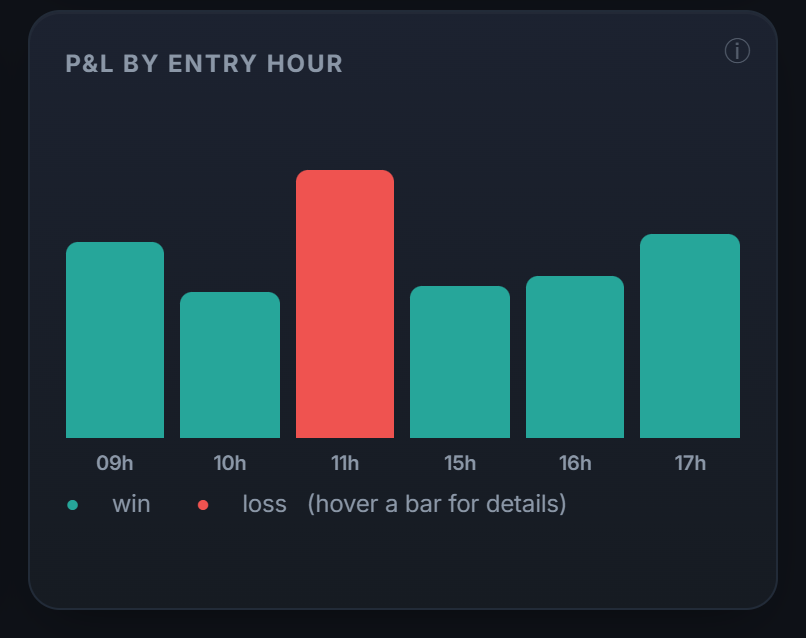
- Trade reporting: Helps you review win rate, average win, average loss, time of day, and strategy performance.
Some platforms also include scanners, backtesting, automatic pattern recognition, or algorithmic features. These can be helpful, but they do not replace judgment. A scanner can show that a stock is moving; it cannot tell you whether the trade fits your risk plan.
Charting tools
Charting is where many traders spend most of their time, but the chart should answer specific questions. Where is the trend? Where are buyers or sellers likely to defend price? Is volume supporting the move? Where would the trade idea be invalidated?
Use multiple time frames with intention. A one-minute chart may help fine-tune entry, while a five-minute or fifteen-minute chart may show the broader intraday structure. A daily chart can reveal larger support and resistance levels that intraday traders still respect.
Scanners and watchlists
Scanners help narrow the market. Instead of staring at hundreds of tickers, you can filter for volume, percentage change, price range, relative volume, gap size, or volatility. The goal is to build a focused watchlist before emotions take over.
A useful watchlist is not a random list of trending symbols. It includes a reason for each ticker: earnings, gap up, strong premarket volume, breakout level, sector movement, or unusual volume. If you cannot explain why a stock is on your list, it probably should not be there.
Journaling and analytics
A trade journal is one of the most underrated tools on this list. It turns trading from a stream of emotional decisions into a reviewable process. Track the setup, entry, stop, target, exit, result, screenshot, and notes about execution quality.
Over time, the journal reveals patterns. You may discover that your first trade of the day performs poorly, that you overtrade after a loss, or that one setup accounts for most of your gains, which is how you tell luck from skill in day trading. That information is more valuable than another indicator.
Choosing a platform or app to day trade on
You can day trade on brokerage apps and platforms that support intraday order entry, real-time market data, account monitoring, and the securities you plan to trade, but the right choice depends on your strategy, experience, account type, and risk controls. The right app is not simply the one with the cleanest interface; it is the one that gives you reliable execution, transparent costs, usable charts, order controls, and clear account information. Because firms can apply their own requirements and risk controls, always confirm margin, short selling, options approval, data, and day trading rules directly with the broker before trading.
Choosing an app should start with criteria rather than hype. A mobile-first app may be excellent for monitoring positions but weak for chart-heavy execution. A professional desktop platform may be powerful but overwhelming for a beginner.
Use this decision checklist when comparing platforms:
| Need | Why it matters | What to check |
|---|---|---|
| Execution quality | Fast markets punish slow or confusing order entry | Order types, routing, fills, platform stability |
| Charting | Your entries and exits depend on readable price action | Time frames, indicators, alerts, drawing tools |
| Risk controls | Prevents one mistake from becoming a major loss | Bracket orders, stop orders, buying power display |
| Data | Intraday trading requires current information | Real-time quotes, Level II if needed, news access |
| Costs | Frequent trades can make small costs meaningful | Commissions, options fees, margin rates, data fees |
| Account rules | Restrictions can stop trading unexpectedly | Cash vs margin rules, intraday margin, broker policies |
| Mobile backup | Helps manage trades if desktop access fails | Stable app, biometric login, easy position closing |
The safer answer is to use a regulated brokerage platform that fits your instrument, account type, and trading plan, and to prioritize reliability, order controls, and clear risk information over flashy features. A beautiful app that encourages impulsive trading can be worse than a plain platform that helps you follow your plan.
Mobile apps are useful, but they should not run the whole process
Mobile trading has made day trading easier to access. That convenience can be helpful for checking alerts, closing a position, or monitoring risk when away from your desk. It can also encourage impulsive trades in situations where the trader cannot properly analyze the chart, spread, or broader market.
For most beginners, a mobile app should be a backup and monitoring tool, not the primary decision engine. If you do trade from mobile, simplify your strategy. Avoid complex setups that require multiple charts, fast hotkeys, or deep order-book analysis.
Rules, margin, and account structure matter
Before you trade, understand whether you are using a cash account or a margin account. In a cash account, you must pay for a security before selling it: buying and selling before paying is freeriding, which Regulation T does not permit and which can get a cash account frozen for 90 days, as the SEC explains on Investor.gov. FINRA notes that since May 2024 most securities transactions settle on T+1, the next business day, so cash-account intraday trading requires attention to settled funds.
Margin accounts introduce different opportunities and risks. FINRA states that to use margin, an account must generally maintain at least $2,000 in equity, though firms may require more, and margin trading can involve intraday margin requirements. Margin can increase buying power, but it can also increase losses and lead to margin calls or forced liquidation.
As of early October 2026, the U.S. day trading rule landscape is in transition. FINRA adopted new intraday margin standards with an effective date of June 4, 2026, and an 18-month phase-in period ending October 20, 2027; the new standards replace the old pattern day trader trade-count framework and the $25,000 pattern day trader minimum equity requirement once firms transition. During the transition, your broker may still be operating under old day trading margin requirements or may have moved to the new intraday margin system, so the practical rule for your account is the one your firm applies.
Under the newer intraday margin approach, firms monitor whether the account has adequate equity relative to positions during the day. FINRA says firms may block trades that would create deficits, calculate deficits after the trading day, or use a combination of approaches; repeated failure to satisfy intraday margin deficits promptly can get the account restricted for up to 90 days.
The takeaway is simple: do not build a day trading strategy around a rule you only half understand. Ask your broker how it handles:
- Cash account settlement and trading violations
- Margin eligibility and minimum equity
- Intraday margin calculations
- Short selling requirements
- Options approval and options margin
- Real-time buying power updates
- Liquidation policies and margin calls
- Platform outages and backup order access
The SEC warns that with margin accounts, investors can lose more than they invest, may need to deposit money on short notice, and may have securities sold by the brokerage firm without consultation to cover a margin loan. For day trading, that risk is amplified by speed. A position can become a problem before the trader has time to think clearly.
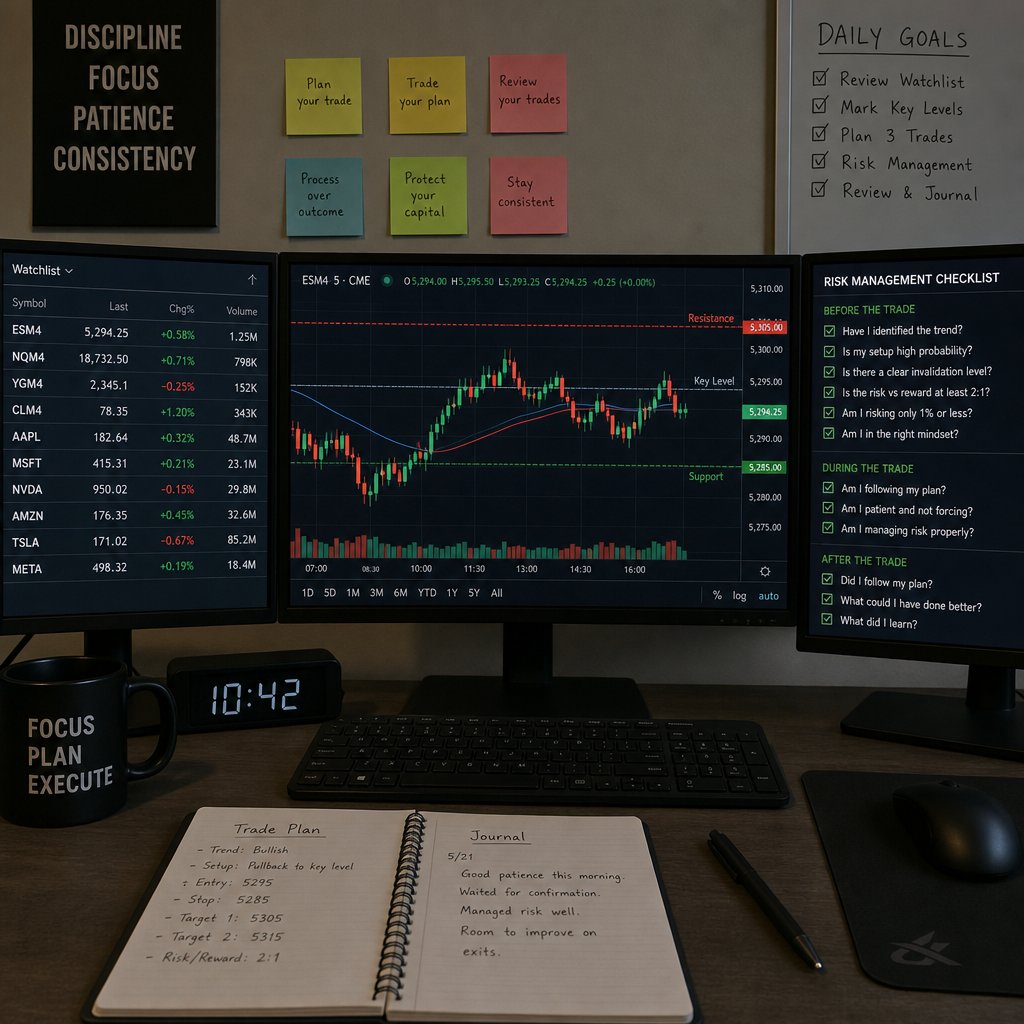
A practical daily routine for active traders
A daily routine helps separate professional behavior from impulsive clicking. You do not need to trade all day to be a day trader. You can focus on the most liquid and active windows, then stop when your plan says to stop.
Before the market opens
The premarket routine is about preparation, not prediction. Review the broad market, major index trends, economic calendar, earnings reports, and any relevant sector news. Build a watchlist with specific levels and scenarios.
A useful premarket note might say: “If price holds above yesterday’s high with strong volume, look for a pullback entry. If it fails below premarket support, no long trade.” This kind of conditional thinking prevents emotional decisions. You know what you are waiting for before the market opens.
During trading hours
During the session, trade less than you observe. Wait for setups that match your plan. Confirm liquidity and spread before entry. Place the stop as soon as the trade is live, or use a bracket order if your platform supports it and it fits your strategy.
Keep your attention on execution quality. Did you enter where planned? Did you move the stop for a valid reason or out of fear? Did you exit because the setup changed or because the position made you uncomfortable? Good trading is measured by process, not only by profit and loss.
After the close
The post-market review is where improvement happens. Save screenshots, record results, and tag each trade by strategy. Note whether the trade followed your plan, whether the position size was correct, and whether your emotions influenced the outcome.
A strong review asks:
- Was this a valid setup?
- Was the entry planned or impulsive?
- Was the stop placed correctly?
- Was the position size appropriate?
- Did I exit according to the plan?
- What should I repeat tomorrow?
- What should I avoid tomorrow?
This review turns trading into deliberate practice. Without review, every day feels new, and the same mistakes repeat.
Common mistakes that damage day trading accounts
No study ranks the causes of day trading failures, so read this list as the avoidable behaviors a risk plan is built to stop, not as a measured ranking: trading too large, ignoring stops, chasing moves, overtrading, using margin carelessly, and believing that confidence equals skill.
One major mistake is increasing size too quickly after a few wins. Winning streaks can create overconfidence, especially for beginners. A trader who doubles position size without enough data may discover that the strategy’s normal drawdown is much larger than expected.
Another mistake is averaging down without a rule. Adding to a losing position can be part of a planned strategy for experienced traders, but for beginners it often means refusing to accept that the original idea failed. If the stock breaks the level that justified the trade, adding more may increase the damage.
A third mistake is trading news without understanding volatility. A stock can move sharply in both directions after a headline, especially around earnings or economic announcements. The move that looks obvious after five minutes may have been chaotic in real time.
A fourth mistake is ignoring costs. Even when stock commissions are low, spreads, slippage, options fees, borrow fees, platform subscriptions, data fees, and margin interest can affect results. FINRA highlights trading costs as one of the key considerations before adopting frequent intraday trading. On futures, that cost is broken down line by line in our guide to futures brokers.
Finally, many traders fail to protect their attention. Trading while tired, distracted, angry, or rushed can turn a decent plan into poor execution. If you cannot focus, reducing size or not trading is a valid decision.
Realistic expectations protect your capital
Day trading is often marketed as freedom, but in practice it can feel like a demanding performance activity. The SEC describes day trading as highly risky and notes that many day traders experience severe early losses and never become profitable. A study of all day traders on the Taiwan Stock Exchange from 1992 to 2006 points the same way: fewer than 1% went on to earn reliably positive returns net of trading costs the following year, according to Barber, Lee, Liu and Odean. That does not mean nobody can succeed. It means beginners should treat the learning curve with respect, and look at what day traders actually make before setting any income goal.
Set expectations around process milestones, not income goals. A beginner’s first goal might be to learn platform mechanics without errors. The next goal might be to follow a written plan for 20 simulated trading sessions. After that, the goal might be to trade very small size while maintaining a journal and staying within risk limits.
Avoid tying your household budget to early trading results. The SEC warns that day traders should only risk money they can afford to lose and should not use money needed for living expenses, retirement, loans, or similar obligations. If the money is emotionally essential, decisions become distorted.
A realistic progression may look like this:
- Education: Learn order types, market structure, chart basics, settlement, margin, and broker rules.
- Observation: Watch how selected stocks behave at the open, during lunch hours, and near the close.
- Simulation: Practice entries, exits, and journaling without risking real capital.
- Small-size trading: Use minimal size to experience real emotions while limiting damage.
- Data review: Identify which setups work best and which behaviors cause losses.
- Gradual scaling: Increase size only after consistent process and sufficient sample size.
This path may feel slower than jumping in, but it is far more durable. In day trading, surviving long enough to learn is a competitive advantage.
A beginner-friendly framework for choosing trades
A clear framework helps beginners avoid random decisions. Before placing any trade, run through a simple filter: catalyst, context, level, entry, stop, target, and size.
- Catalyst: Why is this stock moving today? It could be earnings, market strength, sector momentum, unusual volume, or a technical breakout. If there is no reason, be cautious.
- Context: What is the broader market doing? A long trade in a weak stock during a falling market requires more caution than a long trade in a strong stock during a strong market.
- Level: Where is the trade idea located? Good trades often form around meaningful levels, such as prior highs, VWAP, premarket support, or daily chart resistance.
- Entry: What exact signal triggers the trade? This might be a pullback holding support, a candle close above resistance, or a reclaim of a key level.
- Stop: Where is the idea wrong? If the trade has no clear invalidation point, it may not be a trade worth taking.
- Target: Where will you take profit? Use realistic targets based on structure, not fantasy.
- Size: How many shares or contracts fit the allowed risk? Size should be calculated from the stop distance and dollar risk, not from excitement.
This framework works whether you are trading stock, futures, or currencies intraday. It forces the trade to earn its place.
The right mindset is disciplined, skeptical, and patient
Successful day trading requires emotional discipline because every session offers temptation. There is always another moving stock, another alert, another opinion, another chance to recover a loss, which is exactly where intraday trading turns into gambling. The disciplined trader does not need to take every opportunity.
Be skeptical of easy-profit claims. The SEC specifically warns investors not to believe promises of quick and sure profits from day trading and urges caution around hot tips, expert advice from newsletters and websites, and educational seminars that may not be objective. If someone is selling certainty in a market built on uncertainty, slow down.
Patience also applies to strategy development. A system should be tested across different market conditions before you trust it. A strategy that works during a high-volatility week may fail when markets become quiet. A strategy that works in large-cap stocks may not work in low-float small caps.
Good traders think in probabilities. They can take a loss without treating it as personal failure, and they can take a win without assuming they are invincible. The goal is not to feel right. The goal is to act consistently when the outcome is uncertain.
Key takeaways for building a stronger day trading process
Day trading can be approached more safely when it is treated as a structured skill rather than a shortcut. If you are just starting, focus on preparation, risk control, and platform familiarity before trying to maximize returns.
Keep these principles close:
- Start with risk, not profit. Decide how much you can lose before deciding how much you might make.
- Use a written plan. Define setups, entries, exits, position size, and daily limits.
- Choose tools by function. Good tools support your strategy instead of distracting from it.
- Treat apps carefully. A mobile app is useful only if it supports disciplined execution.
- Understand your account rules. Cash accounts, margin accounts, intraday margin, and broker policies affect what you can do.
- Journal every trade. Your data should guide improvement more than opinions or online hype.
- Scale slowly. Increase size only when your process, not your confidence, justifies it.
- Protect your attention. Fatigue and frustration can be as dangerous as a bad setup.
Day trading is not easy money, and it is not appropriate for every investor. But for those who study seriously, use reliable tools, respect risk, and build a repeatable setup, the process becomes clearer and more controlled. The smartest first step is not to trade more; it is to prepare better, practice deliberately, and make every trade answer to a plan.
Frequently asked questions
What is day trading?
Day trading is opening and closing positions within the same trading day to capture short-term price movement, instead of holding them for months or years. It relies on intraday price action, fast execution, preplanned exits, and strict risk limits, and regulators warn that it is risky and not suitable for everyone.
How do you start day trading?
Start in stages: learn order types, settlement, margin, and your broker’s rules, then watch how a few stocks behave at the open and near the close. Practice in simulation with a journal, move to very small size with real money, review your data, and increase size only after a consistent process.
What apps can I day trade on?
On regulated brokerage apps and platforms that support intraday order entry, real-time market data, account monitoring, and the securities you plan to trade. Choose on execution quality, charting, risk controls, data, costs, and account rules, and keep a mobile app as a backup rather than your main decision tool.
Do you still need $25,000 to day trade in the US?
Not under FINRA’s new intraday margin standards, effective June 4, 2026, which replace the pattern day trader designation and its $25,000 minimum equity requirement. Firms have until October 20, 2027 to transition, so your broker may still apply the old rule: the practical rule for your account is the one your firm applies.
How much time per day does day trading take?
You need real, focused presence during the time windows where you hunt your setups, not necessarily the whole day. A short but fully dedicated window, with no distraction, beats fragmented monitoring between two other tasks.
What's the difference between day trading and swing trading?
Day trading closes all positions within the same session, never overnight. Swing trading holds positions from a few days to a few weeks. It's not a difference in seriousness, but in position horizon and screen time.
Why do most beginners fail at day trading?
No study ranks the causes, but the avoidable behaviors are known: trading too large, ignoring stops, chasing moves, overtrading after a loss, using margin carelessly, and ignoring costs. A written plan, a daily loss limit, and a trade journal address most of them.